Unexploded Ordnance
UXO Risk Assessments by Casltedine & Co
Unexploded Ordnance (UXO) Risk Assessments
An Unexploded Ordnance (UXO) Risk Assessment is often required where a development site may be affected by unexploded bombs, wartime ordnance, or historic military activity. A UXO risk assessment report can support a planning application, identify potential ground risks, and demonstrate that a site can be safely developed. With the UK being hit hard in World War II, with countless enemy bombs, and certain areas being affected more than others.
The potential risk of discovering a UXO (unexploded Ordnance) is likely in these high-risk areas. The depth at which these munitions
can be found will vary by the size and weight of the individual bomb. Some are found intact, whereas others will be found deteriorated
This could make them more dangerous as the explosives will have deteriorated. Expert munition disposal teams will evaluate the site and the surrounding immediate area
With their metal-detecting equipment and ground-penetrating radar (GPR). This equipment allows them to locate and investigate any below-ground anomalies.
The UK had its own munitions factories, where we produced mass amounts of grenades, bullets, and bombs. When these factories closed, ordnance was undoubtedly left behind, and through time
Became buried.
A typical UXO risk assessment reviews historic World War II bombing records, known military sites and defence infrastructure, recorded bomb strikes and wartime activity, geological and site-specific ground conditions, proposed groundworks, piling, and excavation methods. It then recommends risk mitigation and safe working procedures if required.
A UXO risk assessment provides a practical way to identify potential risks early in the project. When properly prepared, it helps protect construction workers, reduce unexpected delays, and ensure safe and compliant site development.
Importance of UXO
Unexploded Ordnance (UXO) refers to military weaponry, such as World War II bombs, shells, grenades, and even landmines that were deployed but failed to detonate on impact as intended. Although these dangerous items have been buried for decades, they remain live, highly volatile, and dangerous if disturbed, as they could still detonate. During the heavy bombing campaigns of World War II, a significant percentage of dropped ordnance failed to explode. Over time, these unstable items became buried under layers of earth. Today, the normal ground movements, natural shifting, and construction activities can bring these highly explosive and unstable items closer to the surface, posing a direct threat to people, modern construction, and infrastructure projects. At Castledine & Co, we have specialised teams who can identify and mitigate these hidden risks before they impact your site. Our team uses advanced historical research and geophysical technology to locate underground anomalies. By identifying potential UXO hazards early, we ensure your team stays safe, your liabilities are minimized, and your project stays on schedule.
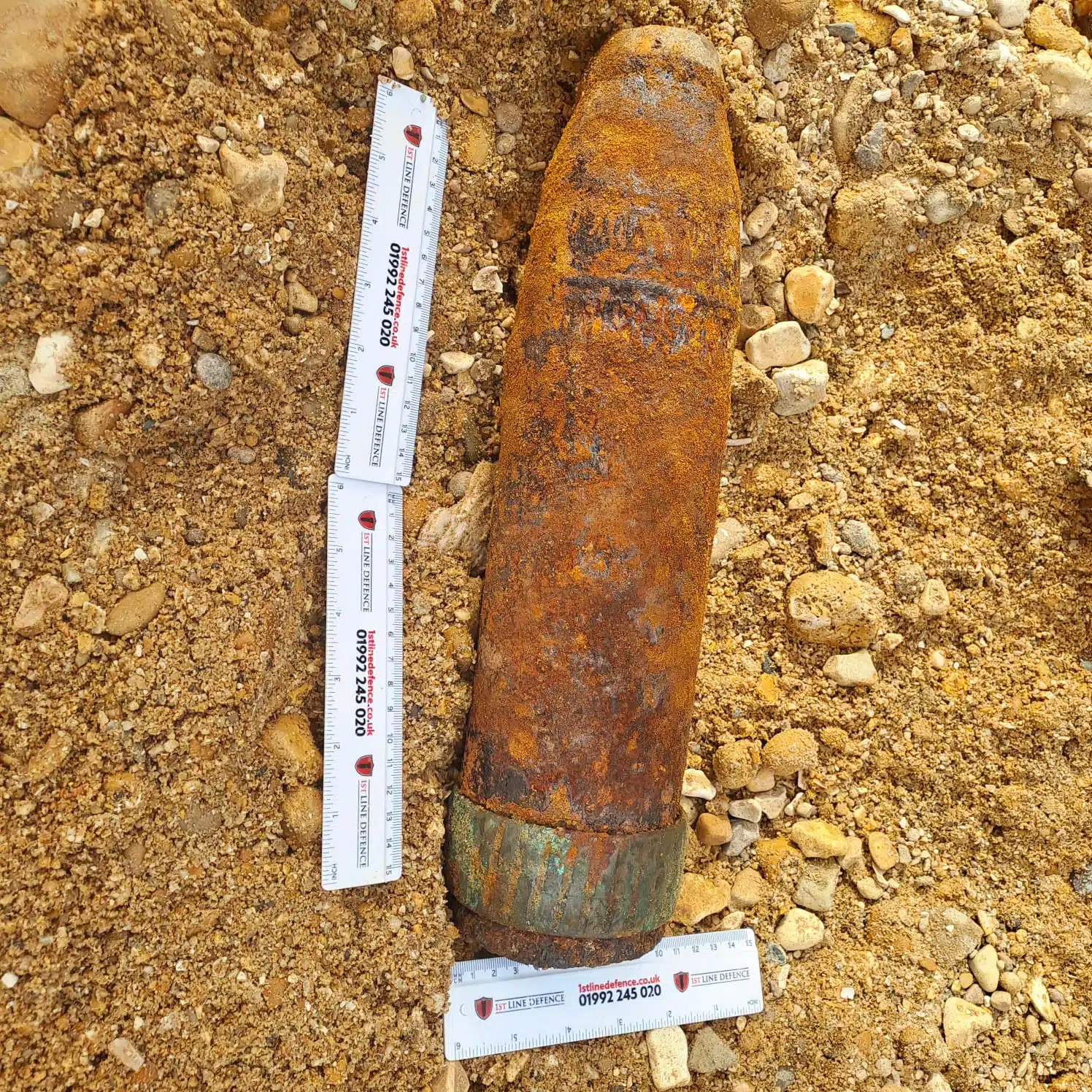
Our highly specialised Ordnance Disposal Engineers will complete your Unexploded Ordnance Assessment using their state-of-the-art GPR (ground Penetrating Radar), which will identify any buried ordnance.
A phase 1 survey, price starts from £206.25