Sustainable Drainage Solutions
Reports by Castledine & Co
Sustainable Drainage Solutions (SuDS)
You will already know that the sewer system becomes overloaded at times of heavy rainfall and untreated sewage is released into our river network and so conditions are now being imposed to help alleviate the problem.
A well-designed SuDS scheme can help with managing surface water runoff, reducing flood risk,
supporting planning applications, meeting Lead Local Flood Authority (LLFA) requirements,
Sustainable Drainage Systems are various methods of managing surface water, usually clean rainwater from roofs and hard surface areas, in a way that allows natural drainage into the ground rather than into the overloaded sewers or if this is not possible, then measures are installed to slow the release of rainfall into the sewers to help stop the overloading.
There are many ways of satisfying this condition and each remedy may be different. Common SuDS components are:-
· Permeable paving (water infiltrates through the surface into a stone sub-base)
· Swales (shallow vegetated channels that convey and treat water)
· Rain gardens / bioretention areas (planted basins that store and filter runoff)
· Soakaways / infiltration trenches (encourage infiltration to ground, where suitable)
· Detention basins (dry most of the time; fill during storms)
· Ponds and wetlands (permanent water features with storage and treatment)
· Green roofs (reduce runoff volume and delay peaks)
· Filter strips and filter drains (linear features that capture and treat runoff)
· Attenuation tanks (often used where above-ground options are limited)
Which of these are used depends very much on the size of the plot (is there enough room), ground conditions (water does not soak away through clay) and groundwater level.
On a small plot, say one or two houses, then if ground conditions allow, soakaway crates, infiltration trench or permeable driveway and patios may be used. If infiltration is not viable then it may be possible to use rainwater harvesting with controlled overflow or an attenuation tank with flow control discharging to an approved outfall such as a watercourse.
The information required for a detailed SuDS design are:-
· Proposed site/landscaping plans. These should be provided in PDF and, if possible, CAD format also. The plans should be as detailed as possible, showing elements such as rainwater downpipes (RWPs) and the roof layout.
· Proposed site levels and finished floor levels. The finished floor levels and external ground levels should be determined ideally by an architect. If this information is not available currently, we can propose some indicative levels based on 1m LiDAR topography.
· Topographic Survey. This is not required if the post-development site levels and FFL are provided. If this information is not available currently, we can propose some indicative levels based on 1m LiDAR topography.
· Infiltration testing should be undertaken to the BRE365 standard and up to a depth of 0.5m below ground levels.
· Sewer asset plan. The sewer asset plan shows the layout and depth of the public sewer in the roads adjacent to the site. This plan is obtained from the local sewerage authority and costs anywhere between £30-70, depending on the provider.
Information regarding the potential use of specialist Rainwater Harvesting Systems. This information would be used to provide an answer to the rainwater reuse references in https://www.gov.uk/government/publications/national-standards-for-sustainable-drainage-systems/national-standards-for-sustainable-drainage-systems-suds
Importance of Sustainable Drainage Systems
With water levels rising and winters becoming wetter, it is so important to ensure that you have adequate drainage on your property.
Sustainable Drainage Systems commonly known as (SuDS) offer an environmental and eco-friendly alternative to the traditional piped drainage by managing surface water through natural processes like infiltration and attenuation. Designed by drainage engineers at Castledine & Co., these systems reduce flood risk, improve water quality, and enhance biodiversity, often using features like rainwater harvesting, permeable paving, swales, and detention basins to comply with mandatory UK planning requirements.
You can learn more about how Castledine & Co. secures planning approval and designs
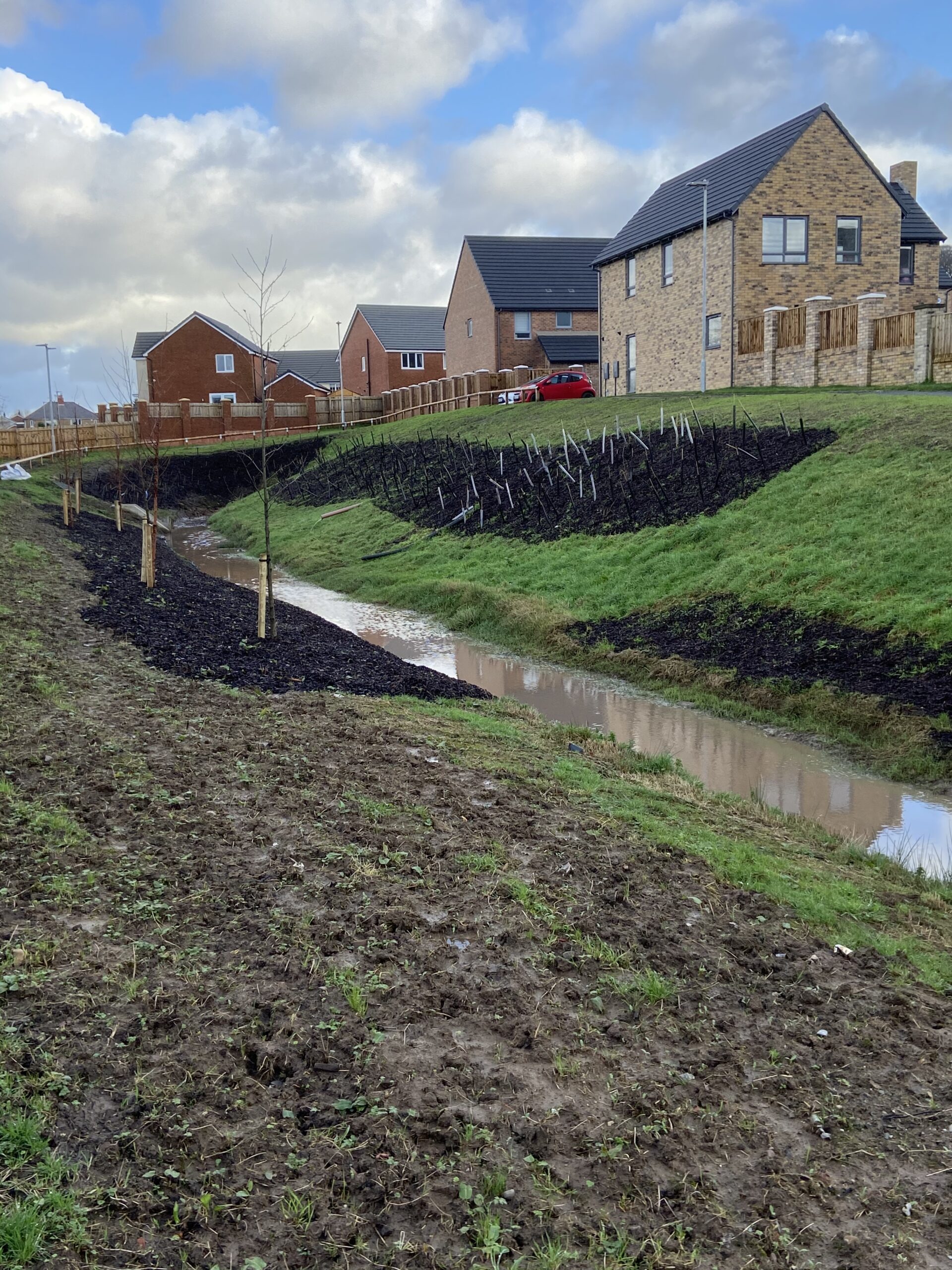
Our Specialist Drainage Engineers, will design your sustainable drainage systems, including attenuation systems and rainwater harvesting.
Price starts from £1,250